
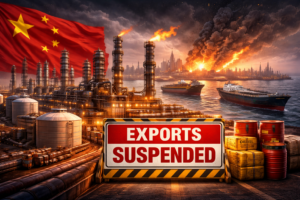
China has instructed its largest oil refining companies to suspend exports of diesel and gasoline as escalating conflict in the Persian Gulf threatens global energy supply chains and disrupts crude shipments from the region, according to reports citing officials familiar with the matter.
The directive reflects growing concerns across Asia about fuel availability as the conflict in the Middle East disrupts tanker traffic and energy infrastructure, tightening oil supply and raising volatility in global markets.
Government Moves to Protect Domestic Fuel Supply
China’s government reportedly told state-owned refining giants to halt overseas shipments of refined fuels and prioritize domestic demand. The decision comes as crude supply flows from the Persian Gulf — one of the world’s most important energy hubs — face significant disruption due to the escalating conflict.
The Persian Gulf region and the Strait of Hormuz, a narrow shipping route that carries roughly 20% of the world’s oil trade, have been severely affected by the crisis. Disruptions there have slowed tanker movement and increased fears of prolonged shortages in energy markets.
As a result, countries across Asia — heavily dependent on imported oil — have begun prioritizing domestic supply and cutting exports of refined fuel products.
Global Oil Markets Under Pressure
The decision by Chinese authorities comes amid mounting disruptions across the Middle East energy sector. Missile and drone attacks tied to the regional conflict have targeted oil and gas infrastructure, forcing temporary shutdowns and interrupting shipments from key production centers.
These disruptions have contributed to sharp volatility in global oil prices, with analysts warning that crude could surge significantly if shipping through the Strait of Hormuz remains constrained.
Energy traders also report that shipping companies and oil majors have suspended or rerouted some tanker movements through the region due to security risks, further tightening supply chains.
Impact on Asian Energy Markets
Asia is considered one of the most vulnerable regions to supply disruptions because of its heavy reliance on imported oil and refined fuels. The current crisis has already prompted some refiners across the region to cut processing rates or adjust operations as crude availability tightens.
China, the world’s largest crude importer, has accumulated substantial strategic oil reserves and diversified suppliers — including purchases from Russia and Iran — which may help cushion short-term disruptions.
However, limiting refined fuel exports signals that authorities are preparing for potentially prolonged volatility in global energy markets.
Outlook for Energy Markets
Market analysts say China’s export suspension highlights the severity of the current geopolitical shock to energy markets. With oil infrastructure under threat and tanker traffic restricted, governments and energy companies worldwide are reassessing supply strategies.
If the conflict continues to disrupt Persian Gulf shipping routes, experts warn the global market could face higher fuel prices, supply shortages, and increased inflationary pressure, particularly across Asia.
For now, China’s move underscores a broader shift toward energy security and domestic supply protection as the geopolitical crisis reshapes global oil trade flows.
Also Check: Cathie Wood’s Ark Invest Snaps Up Coinbase and Robinhood Shares in Dip-Buying Move
GMISL5Y1

