
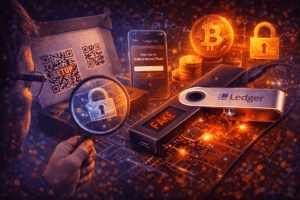
A cybersecurity researcher has uncovered a highly sophisticated counterfeit hardware wallet designed to mimic devices from Ledger, raising fresh concerns about supply chain attacks targeting cryptocurrency users.
The fake devices, reportedly sold on Chinese online marketplaces, are engineered to steal users’ private keys and seed phrases, potentially allowing attackers to drain funds from crypto wallets.
Counterfeit Devices Designed to Bypass Detection
According to the researcher, the fraudulent device closely resembled a legitimate Ledger Nano S Plus, including packaging and pricing, making it difficult for buyers to distinguish from genuine products.
However, when connected to the official Ledger Live software, the device failed the built-in “genuine check,” prompting further investigation.
A teardown of the hardware revealed alarming modifications, including:
- Altered firmware designed to capture sensitive data
- Tampered internal components
- Embedded wireless communication modules not present in authentic devices
These changes suggest the device was intentionally engineered to compromise wallet security.
How the Scam Works
The attack targets primarily first-time users who may be unfamiliar with proper setup procedures.
Inside the packaging, victims are directed via a QR code to download a malicious version of Ledger Live, the official wallet management software.
The fake application then displays a convincing interface, including a spoofed “verification” process. During setup, users are prompted to enter their seed phrase—a recovery key that provides full access to their crypto funds.
Once entered, attackers can immediately access and transfer assets out of the wallet.
Security experts emphasize that no legitimate hardware wallet setup process ever requires entering a seed phrase on a computer or online interface.
Growing Trend of Crypto Hardware and App Scams
The discovery comes amid a broader rise in crypto-related scams targeting both software and hardware users.
Recent incidents include:
- A fake Ledger app on Apple’s App Store that led to losses exceeding $400,000 for a single victim
- A broader campaign that reportedly tricked over 50 users into revealing seed phrases, resulting in approximately $9.5 million in losses
These cases highlight how attackers are increasingly using multi-channel strategies, including fake apps, phishing websites, and even physical devices.
Supply Chain Attacks Raise New Risks
Unlike phishing emails or malicious apps, counterfeit hardware wallets represent a more advanced threat known as a supply chain attack.
In such attacks, the compromise occurs before the device even reaches the user, making detection significantly more difficult.
Experts warn that buying hardware wallets from unauthorized sellers or third-party marketplaces increases exposure to such risks.
Industry Warnings and Best Practices
Ledger and cybersecurity professionals have repeatedly advised users to:
- Purchase devices only from official sources
- Download wallet software exclusively from the official website
- Never share or input seed phrases on any digital interface
- Verify device authenticity using built-in security checks
“If your device fails the genuine check, stop using it immediately,” the researcher warned.
Implications for Self-Custody Users
The incident underscores a critical challenge in the crypto industry: while self-custody offers greater control over assets, it also places full responsibility for security on users.
As hardware wallets become more widely adopted, attackers are increasingly targeting weak points in the user journey—from purchase to setup.
Outlook
The emergence of counterfeit Ledger devices signals an escalation in the sophistication of crypto scams, particularly those targeting self-custody solutions.
As the market continues to grow, experts expect further innovation from both security providers and attackers, making user education and vigilance essential.
For now, the warning is clear: even trusted tools like hardware wallets can become attack vectors if sourced or used incorrectly.
Disclaimer: This article is for informational purposes only and does not constitute financial or investment advice.
Also Check: Citi Study Finds Bitcoin and Gold Combination Boosted Returns Without Increasing Risk
30B7UBI5

