
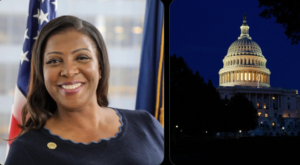
New York Attorney General Letitia James has voiced strong opposition to key provisions of the Digital Asset Market CLARITY Act (CLARITY Act), arguing that the proposed federal legislation could weaken the ability of state law enforcement agencies to investigate cryptocurrency fraud and protect consumers.
In written testimony submitted to the U.S. Senate’s Permanent Subcommittee on Investigations, James warned that while Congress should establish a comprehensive federal framework for digital assets, the current version of the CLARITY Act would preempt portions of state investor protection laws and make it more difficult for states to pursue enforcement actions against fraudulent crypto platforms.
James: States Lead the Fight Against Crypto Fraud
James argued that state attorneys general and local law enforcement agencies have historically played a leading role in protecting consumers from financial fraud, including cryptocurrency scams.
In her testimony, she stated:
“The Digital Asset Market CLARITY Act seeks to interfere with and preempt states’ investor protection laws as well as dilute our ability to prosecute fraud. This is a mistake. State and local law agencies do the lion’s share of law enforcement work in this country.”
According to James, reducing state enforcement authority could leave consumers more vulnerable to fraudulent schemes, particularly in an industry that continues to evolve rapidly.
Concerns Over Federal Preemption
One of James’ primary objections centers on the bill’s interaction with state law.
She contends that certain provisions could:
- Limit states’ authority to investigate crypto-related fraud.
- Restrict enforcement of state investor protection statutes.
- Shift too much regulatory responsibility to federal agencies.
- Reduce flexibility for states to respond quickly to emerging scams.
James urged lawmakers to ensure that any federal crypto legislation complements—rather than replaces—state enforcement efforts.
What the CLARITY Act Proposes
The Digital Asset Market CLARITY Act aims to establish a comprehensive regulatory framework for digital assets in the United States.
Among its major objectives are:
- Clarifying the regulatory roles of the Securities and Exchange Commission (SEC) and the Commodity Futures Trading Commission (CFTC).
- Creating registration requirements for digital asset businesses.
- Defining when digital assets qualify as securities or digital commodities.
- Establishing consumer protection and disclosure standards.
- Providing greater regulatory certainty for the crypto industry.
Supporters argue the legislation would encourage innovation while reducing regulatory uncertainty that has challenged the U.S. digital asset sector for years.
Calls for Stronger Consumer Safeguards
Although James opposes aspects of the CLARITY Act, she has emphasized that she supports stronger federal regulation of cryptocurrency markets overall.
In her testimony, she called on Congress to strengthen oversight by:
- Expanding anti-money laundering safeguards.
- Increasing transparency requirements for crypto companies.
- Enhancing consumer protections.
- Preserving state enforcement authority.
- Improving accountability for digital asset platforms.
James has previously advocated for tougher cryptocurrency regulations, including legislation that would expand New York’s oversight of digital asset businesses.
Industry Divided on the Bill
The CLARITY Act has generated mixed reactions across the crypto industry.
Many blockchain companies, exchanges, and trade organizations support the legislation, arguing that clear federal rules would encourage innovation and attract institutional investment.
However, several consumer advocacy groups, legal experts, and state officials have expressed concerns that certain provisions could reduce existing protections or limit state-level enforcement powers.
Why State Enforcement Matters
State attorneys general have been responsible for numerous high-profile enforcement actions against cryptocurrency companies over the past several years.
New York, in particular, has pursued investigations involving alleged fraud, misleading disclosures, and unregistered crypto activities under its existing state laws.
James argues that preserving these powers remains essential because state regulators are often the first to identify and prosecute emerging financial scams.
Legislative Outlook
The CLARITY Act remains one of the most significant cryptocurrency market structure proposals currently under consideration in Congress.
As lawmakers continue debating the bill, discussions are expected to focus on balancing innovation with investor protection, including the appropriate division of authority between federal regulators and state governments.
James’ testimony adds to the growing debate over how much authority states should retain if Congress establishes a nationwide framework for digital asset regulation.
Looking Ahead
Letitia James’ opposition highlights one of the central policy questions surrounding U.S. crypto legislation: how to create consistent national rules without diminishing the role of states in protecting consumers.
Whether Congress modifies the CLARITY Act to address those concerns could influence the bill’s prospects and shape the future relationship between federal and state oversight of the digital asset industry.
Also Check: Bitcoin, Ethereum, Solana and XRP Spot ETFs See Weekly Net Inflows

