
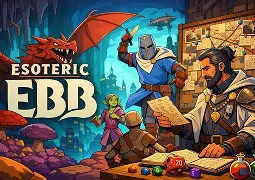
If you enjoy narrative-heavy CRPGs where dialogue matters as much as combat, Esoteric Ebb is a game worth exploring. Released in 2026, the indie RPG combines a fantasy setting with D&D-inspired mechanics, branching conversations, skill checks and a strong focus on player choice. Its structure has drawn comparisons to Disco Elysium, but it builds its own identity around a Cleric protagonist, unusual characters and a reactive quest system.
For new players, however, the game can be intimidating. Your starting stats influence dialogue, checks, spells and even the personality of your character. Meanwhile, quests can branch in unexpected directions, making it difficult to know whether a failed check or unusual decision has actually closed a path.
This guide explains the most important Esoteric Ebb systems, including stat allocation, Cleric builds, the Questing Tree and practical tips for getting more from your first playthrough.
What Makes Esoteric Ebb Different?
At first glance, Esoteric Ebb looks like a traditional isometric fantasy RPG. Underneath that familiar presentation is a game that puts conversation and decision-making at the centre of its design.
The game uses a modified D&D 5e-inspired system. You play as the Cleric, and your abilities are not simply numbers that determine combat performance. They influence the way your character thinks, speaks and reacts to situations.
The result is a CRPG where a conversation can be just as important as a fight.
Instead of relying heavily on conventional combat, the game uses dialogue, skill checks, spells and choices to resolve many encounters. Reviews have praised its reactive storytelling and its ability to make character statistics feel like active personalities within the narrative.
Esoteric Ebb Character Creation Explained
One of the most important decisions in Esoteric Ebb comes before you properly begin exploring.
Character creation gives you 27 points to distribute across six core abilities, along with two proficiency points that can further strengthen selected stats. The six abilities are Strength, Dexterity, Constitution, Intelligence, Wisdom and Charisma.
Each stat does more than provide a conventional RPG bonus.
Strength
Strength affects physical approaches, direct confrontation and certain dialogue possibilities. A high-Strength Cleric can feel more confident and straightforward, while a weaker score can produce a very different personality.
Dexterity
Dexterity is connected to avoiding consequences, freedom and self-interest. It can be useful for players who prefer evasive or unconventional approaches.
Constitution
Constitution represents physical resilience and instinct. It can be particularly valuable when you want a more forgiving first playthrough.
Intelligence
Intelligence is associated with knowledge, memorisation and the pursuit of power. It can also provide additional options for players who enjoy solving problems through information rather than force.
Wisdom
Wisdom is strongly connected to magical and esoteric understanding. For players focusing on spells, it is an important stat to consider.
Charisma
Charisma influences social interactions, persuasion and personality-driven approaches. A Charisma-focused Cleric can solve situations through conversation rather than confrontation.
Because these abilities also influence dialogue and internal interactions, simply creating a balanced character may not always produce the most interesting result.
Best Esoteric Ebb Cleric Build for Beginners
There is no universal “best” build because Esoteric Ebb is designed around different role-playing approaches. However, a balanced spellcaster is a practical starting point if you are playing for the first time.
One recommended approach is:
- Intelligence: 15
- Constitution: 14
- Wisdom: 12
This combination gives you strong access to intelligence-related checks while maintaining enough Constitution to make risky encounters more manageable. Wisdom also gives your spellcasting a useful foundation.
One important lesson from current build guides is that specialising in a single stat can be powerful, but ignoring supporting abilities can create problems later. For example, focusing heavily on Intelligence without giving enough attention to Wisdom can make a magic-focused character less reliable in practice.
If you prefer conversation over combat, you can instead build around Charisma. Meanwhile, players who enjoy physical solutions may prefer Strength or Constitution.
How the Questing Tree Works in Esoteric Ebb
One of the most interesting features of Esoteric Ebb is its Questing Tree.
Rather than relying exclusively on a conventional quest log, the game uses a branching structure that tracks objectives, decisions and quest progression. Major and minor branches can develop differently depending on your actions.
Major quests can eventually “Take Root”, producing rewards and Feats connected to your progression.
This means you should not assume that completing a quest in a different way is automatically a failure. Your choices can shape what happens afterwards.
The system also encourages replayability. A different character build or decision-making style can expose checks, conversations and outcomes that you may not see during your first run.
Why Your Choices Matter in Esoteric Ebb
Many RPGs give players dialogue options mainly for flavour. Esoteric Ebb goes considerably further.
Your decisions can influence skill checks, relationships, quest development and the personality your Cleric develops throughout the story. Reviews have highlighted the game’s large number of choices and its reactive approach to role-playing.
This is why it is often better to embrace your character rather than constantly trying to find the “correct” answer.
Failed checks can create entertaining situations, unexpected consequences and new narrative directions. Reloading every time something goes wrong may actually prevent you from seeing some of the game’s most memorable moments.
Esoteric Ebb Quest and Walkthrough Tips
Because the game contains numerous hidden and passive checks, walkthroughs can be useful when you are specifically looking for a particular outcome.
Current guides note that individual playthroughs can differ significantly because builds and choices influence the available checks and paths.
Here are some useful tips:
Save Before Major Decisions
Manual saves are useful before important quest decisions, particularly when you want to experiment with different outcomes.
Read Dialogue Carefully
Do not rush through conversations. Dialogue often contains clues about characters, objectives and potential approaches.
Experiment With Spells
Spells are not limited to traditional combat applications. They can influence checks and conversations, opening alternative solutions to problems.
Explore Before Leaving an Area
Small interactions can lead to additional information, objectives or unexpected encounters.
Accept Failure
A failed check does not necessarily mean that you have ruined your playthrough. The game is designed around consequences, and failure can become part of your character’s story.
Is Esoteric Ebb Similar to Disco Elysium?
The comparison is unavoidable, and critics have openly described Esoteric Ebb as a “Disco-like” RPG. Both games place enormous emphasis on dialogue, internal thoughts, political ideas, investigation and player choice.
However, Esoteric Ebb introduces a stronger tabletop RPG influence. Its D&D-inspired mechanics, Cleric protagonist and fantasy setting give it a different identity.
The game also makes its stats feel like characters with their own perspectives, creating a distinctive relationship between character development and storytelling.
For fans of Disco Elysium, tabletop RPGs and dialogue-heavy CRPGs, that combination is arguably the game’s biggest attraction.
Why Esoteric Ebb Is Worth Playing
The strongest reason to try Esoteric Ebb is its willingness to make player choice meaningful.
Instead of treating stats, dialogue and quests as separate systems, the game connects them. Your build affects the checks you encounter. Your decisions influence the character you become. Your choices can affect how quests develop.
That design has helped the game stand out among 2026 narrative RPG releases. Critical reception has been particularly positive, with Metacritic currently listing an 85 PC Metascore and a predominantly positive critic response.
Conclusion
Esoteric Ebb is best approached as a role-playing experiment rather than a game with one perfect solution. Its Cleric builds, six-stat system, branching quests and dialogue checks encourage experimentation.
For beginners, a sturdy spellcaster build using Intelligence, Constitution and Wisdom provides a reliable starting point. But if your goal is to experience the game’s unusual storytelling, don’t be afraid to choose Charisma, Strength or another personality-defining approach.
Most importantly, let your decisions have consequences. Esoteric Ebb becomes more interesting when you stop searching for the perfect outcome and start creating your own story.
Also Read: Pakistan Opens Crypto Licensing Portal, Sets September 5 Deadline
