
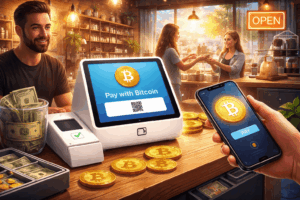
In a major step toward mainstream cryptocurrency adoption, Jack Dorsey’s payments platform Square has begun automatically enabling Bitcoin payments for millions of small businesses across the United States.
The rollout marks one of the most significant integrations of digital assets into everyday commerce, potentially bringing Bitcoin transactions to a massive base of merchants without requiring additional setup.
Automatic Bitcoin Payments Now Live
According to recent announcements, Square has shifted from an opt-in model to an automatic activation system, allowing eligible U.S. sellers to accept Bitcoin by default.
Merchants do not need to configure any new tools. Instead, Bitcoin payments are now integrated directly into Square’s existing point-of-sale ecosystem.
The feature is being rolled out to millions of small businesses, reinforcing Square’s position as a leading payments provider in the U.S.
Instant Conversion Removes Volatility Risk
One of the key features of the rollout is automatic conversion of Bitcoin into U.S. dollars at checkout.
- Payments are converted instantly into USD
- Merchants receive cash by default
- No exposure to Bitcoin price volatility
- No need for crypto custody or accounting changes
This approach allows businesses to accept Bitcoin without taking on the risks typically associated with holding cryptocurrencies.
Additionally, transactions are settled near-instantly, leveraging modern payment infrastructure and technologies such as the Lightning Network.
Zero Fees Through 2026
Square has also introduced a strong incentive for adoption by waiving processing fees on Bitcoin transactions through 2026.
This temporary zero-fee structure is expected to encourage merchants to experiment with crypto payments and accelerate adoption across the platform.
Optional Bitcoin Holdings for Merchants
While USD settlement is the default, Square is also offering flexibility:
- Merchants can choose to keep a portion of payments in Bitcoin
- Businesses can automatically allocate a percentage of revenue into BTC
- Sellers retain full control over their payment preferences
This hybrid model allows businesses to gradually explore Bitcoin exposure without operational complexity.
A Major Push Toward “Bitcoin as Everyday Money”
The move is part of Block’s broader strategy to position Bitcoin as a practical, everyday payment method rather than just a speculative asset.
Square already serves millions of sellers and processes hundreds of billions in annual payments, making this rollout particularly impactful at scale.
Industry observers say this could:
- Significantly increase real-world Bitcoin usage
- Normalize crypto payments among small businesses
- Strengthen competition with traditional payment systems and fintech platforms
Competitive Landscape: Payments Giants Expand Crypto Efforts
Square’s move comes amid growing competition in digital payments:
- Fintech firms are integrating stablecoins and crypto wallets
- Traditional payment providers are expanding blockchain-based services
- Rivals like PayPal are also pushing deeper into digital asset ecosystems
However, Square’s automatic enablement strategy stands out by removing friction entirely, making Bitcoin acceptance seamless for merchants.
What It Means for Businesses and Consumers
For Businesses:
- No setup required to accept Bitcoin
- No volatility risk due to instant conversion
- Optional exposure to Bitcoin as an asset
For Consumers:
- More places to spend Bitcoin
- Faster and more accessible crypto payments
- Increased real-world utility of digital assets
Outlook: A Turning Point for Crypto Adoption?
Square’s latest rollout could represent a turning point in the adoption of Bitcoin for everyday transactions.
By embedding crypto payments directly into existing infrastructure, the company is bridging the gap between traditional finance and digital assets.
While challenges such as regulation and user adoption remain, this move signals a clear trend: cryptocurrency is steadily moving closer to mainstream commerce.
Also Check: Quantum Computing Threat to Bitcoin Gains Attention, But Experts Say Immediate Risk Is Overstated

