
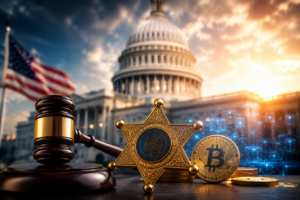
The Major County Sheriffs of America (MCSA) has officially withdrawn its opposition to the Digital Asset Market CLARITY Act (H.R. 3633), changing its position to “neutral” after lawmakers and the Trump administration addressed several concerns surrounding the bill’s decentralized finance (DeFi) provisions.
The policy shift represents a significant development for the cryptocurrency market structure legislation, which has faced resistance from multiple law enforcement organizations over concerns that portions of the bill could hinder investigations into illicit crypto activity. With one of the most influential law enforcement groups softening its stance, the CLARITY Act may now have a clearer path through the U.S. Senate.
Why the Sheriffs Changed Their Position
In a July 3 letter addressed to Senate Banking Committee Chairman Tim Scott and Ranking Member Elizabeth Warren, the MCSA stated that continued discussions with the administration and lawmakers had provided additional clarity regarding the interpretation and expected implementation of Section 604 of the legislation.
Following that review, the organization said it was changing its position from “oppose” to “neutral,” while continuing to support efforts to strengthen the bill through targeted amendments.
The association emphasized that its concerns had not entirely disappeared but acknowledged that recent discussions addressed several issues raised in its earlier May 14 letter.
Section 604 Remains the Center of Debate
Section 604 incorporates language from the Blockchain Regulatory Certainty Act (BRCA), a proposal designed to protect non-custodial blockchain developers, software providers, and infrastructure operators from being held legally responsible for crimes committed by users of decentralized platforms—provided they do not control customer assets.
Supporters argue that developers who merely publish software should not face liability for how independent users employ decentralized protocols.
Law enforcement organizations, however, have warned that broad legal protections could make it more difficult to investigate or prosecute crypto-related financial crimes involving decentralized applications, mixers, or other DeFi services.
MCSA Still Wants Additional Amendments
Although the organization no longer opposes the bill, it stopped short of endorsing it outright.
Instead, the MCSA urged Congress to make several additional changes, including:
- Giving state and local law enforcement agencies a formal role in the Treasury Department study required under Section 309.
- Including local investigators in future advisory committees established under the legislation.
- Providing additional funding for blockchain forensic tools, specialized training, and investigative resources needed to combat crypto-related crime.
The association argued that local and state agencies investigate the majority of cryptocurrency-related criminal cases and should therefore play a larger role in shaping future digital asset regulations.
Senate Prospects Improve
The MCSA’s decision removes one of the most visible law enforcement objections to the CLARITY Act and is widely viewed as strengthening the bill’s chances in the Senate.
The legislation cleared the Senate Banking Committee earlier this year but has awaited a full Senate vote amid broader debates over stablecoin regulations, ethics provisions, and other digital asset policy issues.
Industry observers believe the removal of a major law enforcement objection could increase bipartisan support as lawmakers prepare for the next stage of Senate consideration.
Growing Support From Law Enforcement
The MCSA is not the only law enforcement organization to soften its position on the legislation.
Earlier, the National Organization of Black Law Enforcement Executives (NOBLE) expressed support for the CLARITY Act, stating that the proposal provides investigators with additional tools while preserving existing criminal enforcement authority.
Together, these developments suggest that lawmakers are making progress in balancing blockchain innovation with public safety concerns, even as negotiations continue over specific provisions.
Industry Reaction
The MCSA’s policy shift was welcomed across the cryptocurrency industry, with many legal experts and digital asset advocates describing it as an important milestone for U.S. crypto regulation.
Supporters argue that clarifying liability rules for software developers is essential to encouraging blockchain innovation while maintaining accountability for bad actors who knowingly facilitate criminal activity.
However, several policy questions—including stablecoin oversight, ethics requirements for elected officials, and final enforcement language—remain under negotiation before the bill can advance to a final Senate vote.
What Comes Next?
While the Major County Sheriffs of America no longer opposes the CLARITY Act, Congress still faces several outstanding policy debates before the legislation reaches the president’s desk.
The organization’s neutral stance nevertheless removes a significant political obstacle and signals that compromise between lawmakers, regulators, and law enforcement is possible. If additional amendments satisfy remaining stakeholders, the CLARITY Act could become one of the most significant cryptocurrency regulatory frameworks enacted in the United States.
Also Check: Moody’s Warns Dormant Bitcoin Wallets Face Quantum Threat as Trump Pushes Quantum Computing
CMKNXRKA

